
Emergency Dentist Tampa

Fast Attention for Painful Toothaches

Roughly 1 in 6 Americans will experience a dental emergency this year, whether it involves a surprise toothache or knocked-out tooth. In these situations, time is of the essence, which is why our Tampa emergency dentists are happy to see patients right away and provide the relief they deserve. Our emergency dental services at Advanced Dental Associates of Tampa Palms ensure we’re able to solve your urgent problems quickly so you can get back to your life just as fast.

Why Choose Advanced Dental Associates of Tampa Palms for Emergency Dentistry?

  • Same-Day Dental Appointments Available
  • State-of-the-Art Dental Office
  • Multiple Sedation Dentistry Options

How We Handle Dental Emergencies

Initial Call: We recommend reaching out to us as soon as you think something might be wrong with your teeth. On the phone, we’ll ask about your symptoms, go over first-aid tips, and let you know if you should visit us immediately.

Emergency Exam: Our team will perform an exam and take X-rays to figure out the root source and scope of your problem.

Presentation of Treatment: Before providing any care, we’ll discuss your options and outline all the details, such as the expected timeline and associated costs.

Delivery of Care: We’ll get you out of pain and fix any damage, and we’ll schedule necessary follow-ups as well.

The Most Common Dental Emergencies

The term “dental emergency” can apply to a lot of situations, and below are several that we can help with if you ever experience them. Even if you aren’t sure, we recommend reaching out to our team if you suspect your situation is an emergency—it’s better to be safe than sorry! Click the icons to get more specific guidance.

Understanding the Cost of Dental Emergencies

A woman consulting her dentist about treatment costs

Even if you need urgent oral care, you should learn its price before you commit. How else will you know whether treatment would fit your budget? Still, the cost of emergency dentistry varies; you’ll have to see our dentists to get a precise estimate. Our team will also work to make care more affordable, walking you through its price factors, dental insurance, and more. Learn the additional details by reading below or by calling us.

Every Dental Emergency Differs
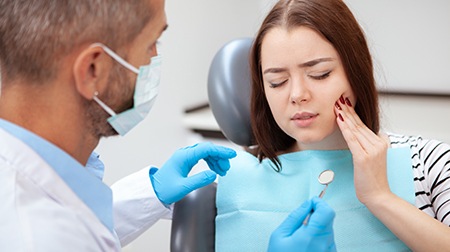
An unhappy woman waiting to have her toothache treated

In itself, an emergency dental visit doesn’t cost much; it only charges you for an oral exam, diagnosis, and a list of suggested procedures. A dental emergency’s expense mostly comes from the later treatment. Since that’s the case, you’d be wise to see us for an estimate.

Based on your situation, we’ll suggest one (or more) of our emergency services. These can include:

  • Root Canal Therapy
  • Tooth Extraction
  • Dental Crowns
  • Other Options

Whatever the exact problem, you can rest easy. We’ll explain our findings, suggested treatment plans, and estimated costs before you commit, ensuring you know what to expect.

Does Dental Insurance Cover Dental Emergencies?

An insurance agent discussing dental insurance with a patient

Thankfully, dental insurance usually does cover dental emergencies. Most plans even offer full coverage for yearly urgent oral exams, and many apply benefits to common services. It’s pretty common for an insurance provider to help with a dental emergency’s cost.

All that said, remember that every dental differs. Your own may follow unique rules, or maybe it brings yearly maximums into the mix. That means you should check your plan’s benefits before you settle on your final treatment. If you want, we’ll even help you contact your plan provider.

Other Options for Making Dental Emergencies Affordable
An obscured patient paying for their dental emergency care

With or without insurance, your dental emergency can be affordable. All you need to do is rely on our office’s varied payment options! At Advanced Dental Associates, we happen to offer:

  • In-House Membership Plans – By paying a monthly fee, you can join our office’s in-house membership plan. It would give you a yearly emergency exam and 10% off most treatments.
  • Flexible Financing – Our practice proudly works with CareCredit and LendingClub, two great 3rd party financiers. They’ll let you cover your emergency costs in small monthly installments.

Smile Care is a Money-Saver
A ceramic tooth, a piggy bank, and money on a light blue wooden table

Many dental emergencies are unavoidable accidents, but most stem from bacterial infection and damage. Investing in regular dental visits and good oral hygiene should save you thousands in fees.

Keep in mind that delaying care for a dental emergency is costly. The longer you wait to get help, the higher your care’s final price will be. What would’ve been a low-cost procedure for a toothache could then become a pricey tooth extraction.

From the above, you can see we want your emergency care to fit your budget. Learn how to finance it by visiting our office soon!

How to Prevent Dental Emergencies

Close up of man showing off his teeth

While we’re always happy to help with any dental emergencies life might throw at you, it’s better to avoid them altogether if possible! A few preventative measures can go a long way towards saving you time and money. Below, we’ve put together a list of general tips that can decrease your risk of oral health conditions and accidents. Of course, if you’d like more specific advice about preventing a specific dental problem, we’ll gladly provide personalized suggestions over the phone or during your next visit.

Visit Your Dentist Regularly

Patient pointing out hurting tooth to dentist

We recommend scheduling regular checkup and cleaning appointments once every six months, or twice a year. This gives us the opportunity to examine your mouth for dental emergency warning flags, and help you form a treatment plan while the problem is still in its early stages. It also lets us scrub the plaque and tartar from your teeth – both of which are just as hazardous for your oral health as bacteria, and harder to remove at home!

Maintain Good Oral Hygiene Habits at Home

Woman flossing her teeth in mirror

Your day-to-day oral hygiene routine should at least consist of brushing twice and flossing once. Rinsing with an antibacterial mouthwash or warm water is also a good idea, but brushing and flossing should be your priority. These two simple actions clean harmful bacteria from your mouth, mitigating build up and decreasing your risk for cavities and gum disease.

Be Careful With Your Diet

Woman holding ice cream and rubbing her jaw

Certain foods and drinks are better for your general health than others, and that goes for your oral health, too. Sugary and acidic treats in particular can cause a number of complications when consumed in excess. Sugar accelerates bacterial growth, while acid wears down your enamel – both of these effects make your teeth more vulnerable to tooth decay, gum disease, infection, and dental sensitivity.

Wear a Mouthguard
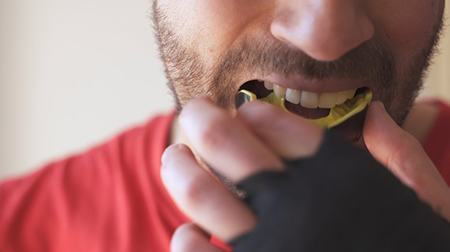
Closeup of athlete inserting a mouthguard

Not all dental emergencies have to do with your oral hygiene! High contact sports, for example, sometimes result in chips, cracks, or tooth loss. While you could say that’s the name of the game, you don’t have to play unprotected. We provide mouthguards so you can play hard and worry less.

Another special type of mouthguard we can provide is a nightguard. Typically prescribed for nightly teeth grinding, this appliance will protect your teeth from premature wear due to excess pressure.

Use Tools, Not Teeth to Open Packaging

Woman trying to use her teeth to open a soda bottle

When your hands are full or a snack packet is especially difficult to open, you might be tempted to make use of your teeth. Your pearly whites are meant for chewing and tearing, but not into cardboard or plastic! Not only can this habit wear down your teeth faster, it can also cause damage if what you’re biting into is hard enough or trigger chronic jaw aches. Simply put, your teeth are not a suitable bottle opener.

Dental Emergency FAQs

What Does Throbbing Tooth Pain Mean?

If you are experiencing a throbbing pain in your tooth, this is likely a sign of infection or inflammation. Cavities or cracks inside your tooth can allow air and bacteria to reach the sensitive, inner area of your tooth where the pulp is located. This can often result in irritation and infection of the pulp nerves, causing pain. This may also happen if there is tooth decay present.

In other cases, your tooth throbbing may be a result of chronic teeth grinding (bruxism) or jaw clenching. Regardless of the cause, you should be seen by your dentist as soon as possible.

Will a Toothache Go Away on Its Own?

Unfortunately, toothaches usually do not go away on their own. Because of this, we recommend that you schedule a checkup with your dentist as soon as possible. There are many potential causes for a toothache, and your dentist can help determine which is responsible for yours so we can get you the treatment you need.

Taking care of a toothache quickly can also help us catch any underlying oral health problems before they get worse.

In some cases, toothaches that are caused by pain around the tooth and not inside it can go away on their own, such as gum irritation.

Should I Visit the Emergency Room First for Dental Emergencies?

Unfortunately, most emergency rooms aren’t equipped to handle dental emergencies properly. However, if you experience any of the following, you should always go to the emergency room first:

  • Jaw fractures and dislocations
  • Serious cuts or lacerations to the face or mouth
  • An abscess or infection that has swollen to the point where you cannot breathe or swallow

If none of these apply to you, it is best to contact Advanced Dental Associates and schedule an urgent appointment with your dentist first. We offer same-day appointments as well as sedation options to help ease pain and anxiety during treatment.

Can I Pop a Dental Abscess on My Own?

Never under any circumstances should you attempt to pop or drain a dental abscess yourself. If you have one, please contact us as soon as possible. This is considered a dental infection and thus is a dental emergency.

By popping the abscess yourself, you will expose your mouth to more bacteria and make the area more irritated in the process.

Toothaches

Is my toothache a dental emergency? There are many reasons that your tooth could be in pain, ranging from minor problems to severe issues. Seek immediate attention if you are experiencing any of the following symptoms:

  • Persistent or throbbing pain that lasts longer than 24 hours
  • An abscess or painful bump on the gumline
  • A loose or broken tooth
  • A fever

How you should handle a toothache: If you are experiencing a toothache, your first step should be to contact Advanced Dental Associates of Tampa Palms and describe your symptoms. From there, our team can determine if you need to be seen, and we can schedule you for an emergency appointment if necessary.

While you wait, you can protect your tooth by taking the following precautions:

  • Do not chew on the side of the mouth with the painful tooth
  • Take over-the-counter pain reliever to temporarily alleviate discomfort
  • Apply cold compresses to the outside of the mouth over the painful area
  • Never pop a pimple-like bump that may appear on your gums
  • Never apply aspirin directly to your teeth or gums

How we treat toothaches: Before we can determine how to treat your toothache, we need to first examine your tooth. Your treatment will then depend on the specific cause of your pain. This could be anything from a crown, filling, antibiotics, root canal, prescription mouthwash, gum disease treatment, or an extraction.

Chipped Teeth

Is a chipped tooth a dental emergency? While a chipped tooth is not considered an urgent emergency, you should still be seen by your dentist as soon as possible. Even small chips can become big problems if left untreated and can eventually lead to serious damage or decay.

How you should handle a chipped tooth: Should you chip your tooth, immediately rinse your mouth with warm water to help clean the damaged tooth and ensure that you don’t accidentally swallow any broken pieces left behind.  Next, place a cold compress on your face over the broken tooth to help prevent swelling and alleviate any discomfort. You can also take an OTC pain reliever like ibuprofen or acetaminophen.

How we treat chipped teeth: Most of the time, chipped teeth can be repaired with tooth-colored composite resin, however if you chip a very visible tooth such as a front tooth, you may want to consider upgrading to a dental veneer. Your dentist can discuss your options with you when you come in.

Cracked Tooth

Is a cracked tooth a dental emergency? Depending on the severity of the damage, your cracked tooth could be considered a dental emergency. Minor damage is considered non-urgent, while severe damage should be treated right away. Unfortunately, not all cracks are visible, so if you notice tooth sensitivity or pain when biting down following a facial injury, you could have hidden damage.

How you should handle a cracked tooth: If you crack your tooth, gently rinse your mouth with warm water and apply a cold compress to your face over the broken tooth. This will keep the swelling down and help alleviate the pain you may be experiencing. Avoid chewing on that side of your mouth until you’ve had the tooth repaired or extracted and have been given the okay by your dentist.

How we treat cracked teeth: If the damage to your tooth is minor, we may be able to repair it with dental bonding using tooth colored composite resin. However, if the damage is more severe, you may need a crown to hold it together. In extreme cases, we may need to completely extract the tooth and discuss replacement options once the socket has healed.

Very Sensitive Teeth

Are very sensitive teeth a dental emergency? Tooth sensitivity can occur when the layers of your teeth underneath the enamel or roots become exposed. If it is mild, tooth sensitivity is not considered a dental emergency. Minor sensitivity can be caused by many things, including teeth whitening, overly aggressive brushing, a highly acidic diet, or teeth grinding (bruxism).

However, if your sensitivity is severe, long-lasting, or is only affecting one or two teeth, it is considered a dental emergency, and you should be seen by your dentist as soon as possible. This type of sensitivity can be caused by a variety of things, including a cracked tooth or filling, a deep cavity, gum recession, gum disease, or tooth abscess or infection.

How you should handle sensitive teeth: If you are experiencing sensitivity, first call your dentist. We can assist you in determining how to care for your teeth at home, or if you need to be seen. Be sure to drink plenty of lukewarm water to keep your mouth clean, avoid eating anything spicy, acidic, or sweet, and manage any pain with OTC pain relievers as instructed by your dentist.

How we treat tooth sensitivity: How we treat your sensitivity will depend on what’s causing it. If it is due to weakened or eroded tooth enamel, you may need to switch to a desensitizing toothpaste, prescription mouthwash, or receive a topical fluoride treatment.

If the sensitivity is caused by gum disease or a tooth infection, you could require antibiotics, gum grafting, gum disease treatment, or a root canal.

Knocked-Out Tooth

Is a knocked-out tooth a dental emergency? Yes, a knocked-out tooth is a dental emergency. While there are no guarantees, there is a possibility your dentist can still save your tooth, but in order to do this, you must act quickly.

How you should handle a knocked-out tooth: Should you lose a tooth, don’t store it in water, as this can damage it. Instead, place it in either a container of milk, saline solution, your own saliva, or an ADA approved tooth preservation kit available at pharmacies.

How we treat knocked-out teeth: There is often a chance that your tooth can be reimplanted if it is still viable (still alive and not severely damaged). However, if it cannot be saved, your dentist can discuss replacement options such as a bridge or a dental implant. While you may not think it’s necessary to replace a back tooth, there are a variety of problems that can go along with untreated tooth loss.

Lost Filling or Crown

Is a lost filling or crown a dental emergency? Dental restorations like crowns and fillings weren’t meant to last forever, so on occasion older ones can break or fall off. When this happens, it is not considered an urgent emergency; however, even if it doesn’t hurt, your tooth is now vulnerable to infection. Therefore, please call us as soon as possible for an appointment.

How you should handle a lost filling or crown: Should you lose a filling or crown, please reach out to us as soon as possible, and do not attempt to reattach it yourself!

How we treat lost fillings or crowns: If your restoration is still mostly intact, it may be possible for us to re-cement it into place. However, if it is too old, damaged, weak, or if you cannot locate it, we may need to replace it.

Broken Denture

Is a broken denture a dental emergency? Wearing damaged dentures can not only injure your gums, soft tissues, jaws, and remaining teeth, it can also interfere with your ability to eat. Whether your artificial teeth or the base of your prosthetic are damaged, call your Tampa emergency dentist right away.

How to handle a broken denture: If your denture is broken, do not wear it until we’ve seen you. Wearing a damaged prosthetic could injure your cheeks, tongue, or gums and cause the damage to the prosthetic itself to get significantly worse.

Never attempt to repair a denture yourself with super glue or other household items, as these are not biocompatible and could make you sick.

How we treat broken dentures: How your Tampa emergency dentist treats your broken dentures depends on the severity of the damage. In some cases, we may be able to use composite resin to fill in a small chip or crack. In other situations, the denture may need to be readjusted to fit properly. It is possible, however, that we may need to fit you for a brand-new denture if yours cannot be repaired. This is a great opportunity to consider switching to an implant denture!

Loose Permanent Tooth

Is a loose permanent tooth a dental emergency? Sometimes called extruded or partially dislodged, permanent teeth can become loose gradually over time, or as the result of an injury. If your tooth is loose, it is in danger of falling out, even if it’s not in pain.

How you should handle a loose permanent tooth: If your tooth becomes loose, call your Tampa emergency dentist as soon as possible. Do not wiggle the tooth or play with it with your fingers or tongue. When brushing your teeth, brush carefully around it and do not touch it with the toothbrush. You can also clean your mouth by swishing with warm salt water.

How we treat loose permanent teeth: Loose permanent teeth can sometimes be saved by splinting them in place, however there are no guarantees that this will be successful. If the tooth cannot be saved, your Tampa emergency dentist may need to extract it. If this is the case, we would be happy to discuss tooth replacement solutions such as bridges or dental implants once your gums have healed.

Injury to the Gums, Lips, or Tongue

Is an injury to the gums, lips, or tongue a dental emergency? A cut in the mouth can bleed quite a bit and can be extremely alarming, but your Tampa emergency dentist may be able to help you with this injury, which is a common occurrence during sports.

How you should handle an injury to the gums, lips, or tongue: If you injure your soft tissue, clean the area gently with water to wash away any debris and bacteria. Then, apply pressure to the wounded area with a clean washcloth or piece of gauze until the bleeding stops. You can also apply an icepack or cold compress to reduce swelling and numb the pain.

How we treat injuries to the gums, lips, or tongue: If needed, your Tampa emergency dentist can stitch the wound closed and help keep your wound clean. However, if the bleeding has not stopped within ten minutes, please go directly to your local emergency room.

Learn More About Sports Mouthguards

Jaw Pain

Is jaw pain a dental emergency? Yes. While jaw pain may not seem like a dental emergency, it can negatively affect your daily life and eventually lead to serious oral health problems if not treated.

How you should handle jaw pain: If you are experiencing jaw pain, please call us directly for further instructions and we will give you specific information over the phone. Generally, you can take over-the-counter pain relievers and apply an icepack to ease swelling and discomfort. However, if your jaw is broken or dislocated, go to your local emergency room as soon as possible. We will be happy to fix up any damage to your smile after you’re discharged.

How we treat jaw pain: Bruxism (teeth grinding) can be treated with a custom mouthguard that can help eliminate pain in your jaw. We also offer TMJ therapy to help realign your jaw and prevent serious problems later in life. If your pain is caused by impacted wisdom teeth, we can work with you to extract them.

If you need to go to the emergency room first, we will be happy to assist you with fixing lost or damaged teeth once you’ve been discharged.

Something Stuck Between the Teeth

Is something stuck between my teeth a dental emergency? If you have something caught between your teeth, never attempt to dislodge it with tweezers, toothpicks, or any other sharp instrument. This can cause injuries to your soft tissue. Instead, try flossing, brushing, or rinsing your mouth with water. If you still cannot remove the trapped debris, please call your Tampa emergency dentist and we will be happy to assist you in clearing it out.